From the server itself
The agent reads the cloud provider's region and the addresses your apps connect to: databases, backups and outside services.
Data location
More countries now set rules on where data must be kept. Kiyesi shows where each server, database, backup and outside service sits, how sure it is, and which are outside your home country.
Governments and regulators in more and more countries now say where some kinds of data must be kept, such as payment, health or personal records, or limit sending it abroad. Wherever you are, a client, an auditor or a regulator will ask where your data is, and most teams cannot answer quickly.
Kiyesi answers it from what your servers already report, and keeps the answer current as you add servers or move a database.
Kiyesi shows where data is. It is not legal advice: ask your lawyer what a rule asks of you.
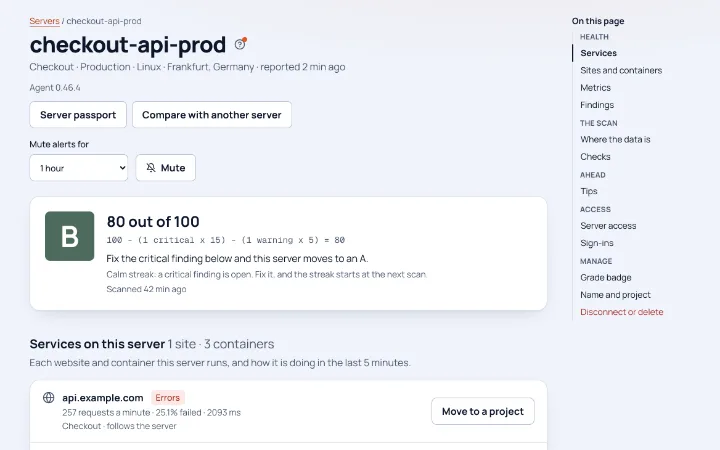
The agent reads the cloud provider's region and the addresses your apps connect to: databases, backups and outside services.
Each place is confirmed, likely, or for review, so you know what to check by hand before an audit.
Tag the databases that hold payment data, and Kiyesi flags any copy of it outside your home country.
Choose your team's home country, any country in the world. Where Kiyesi has a rule pack for your country, it shows that country's rule beside it, and more are added as teams ask.
One click makes a data map report, as a PDF or a read-only link that expires, which never names a person.
kiyesi datamap prints the same map, and a one-off scan shows a server's data location before you sign up.
Sign up, install the agent with one command, and read your first report in about a minute. One server is free.
Watch the guided tourAbout 90 seconds